
Plenty of couples we speak to are choosing a civil ceremony – either as the only ceremony or alongside a religious one – and most of the questions we get aren’t about the venue itself. They’re about the process: when to give notice, what a registrar actually needs, and whether it’s realistic to have the ceremony and the reception in the same building. Here’s the practical version.
What Is a Civil Ceremony (and How Is It Different from a Religious Ceremony)?
A civil ceremony is the legally binding part of getting married in the UK, conducted by a registrar rather than a religious officiant. It doesn’t include religious readings, hymns or ceremony content, and it has to happen at a venue that’s licensed to host civil marriages – not every function room qualifies.
Plenty of couples treat the civil ceremony as the whole event. Others use it purely for the legal formality and layer a religious ceremony – Hindu, Sikh, or another tradition – around it, sometimes on the same day. Both are common traditions – one around can genuinely handle both, saving you from splitting the day across two locations.
Steps to Book a Civil Ceremony at a Venue
The process is fairly linear, but it trips people up when they leave it too late.
- Give notice to your local register office. This is a legal step, separate from booking the venue, and it has to be done in person at the register office covering where you live — not where the wedding is happening.
- Confirm registrar availability for your date. Registrars are booked through the local authority, not through the venue, so this needs sorting alongside your venue booking rather than after it.
- Confirm the venue’s civil ceremony licence. Ask directly rather than assuming — not every event space holds one.
- Book the space once you’ve confirmed both the registrar and the licensing are in place for your date.
- Confirm final guest numbers closer to the date so the ceremony layout and any reception that follows can be finalised.
On timing: current government guidance requires at least 28 days’ notice before the ceremony can take place, and this can extend to several weeks longer in cases where immigration checks are needed. It’s worth giving notice as early as your circumstances allow rather than cutting it close — full detail is available directly on GOV.UK.
Combining a Civil Ceremony with a Reception at Sattavis
One of the more common questions we get is whether the ceremony and the reception can genuinely happen at the same venue, on the same day, without one running late and eating into the other.
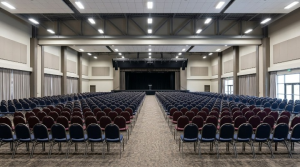
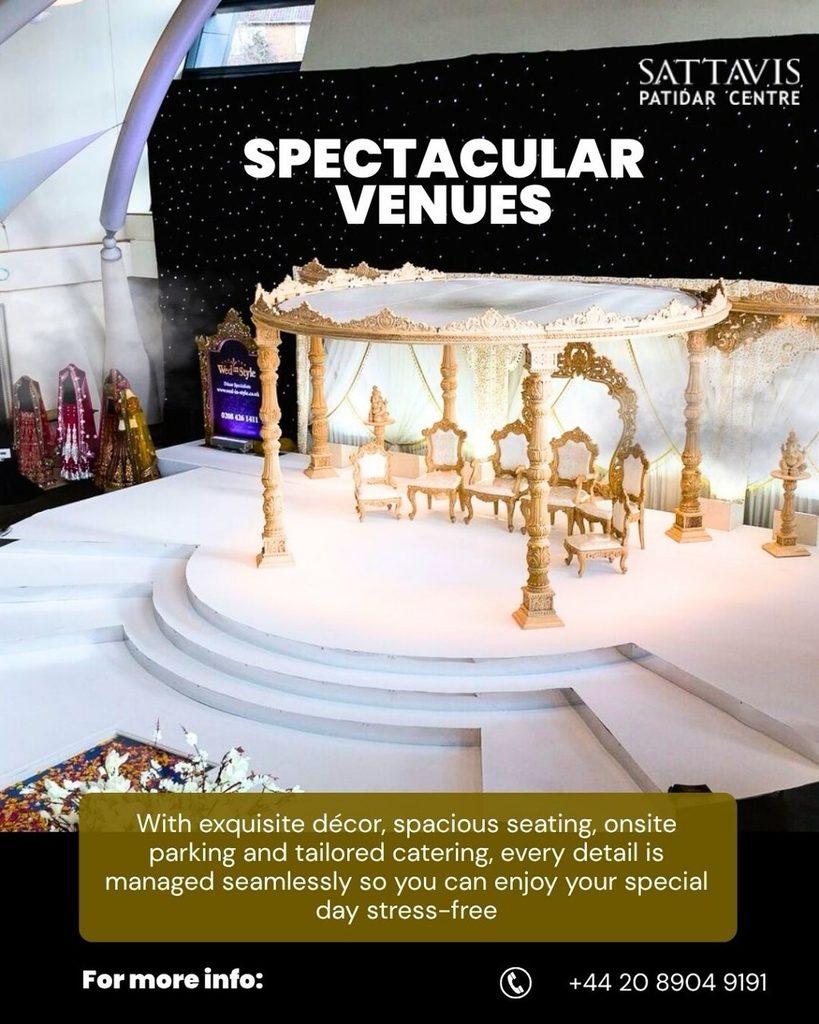
At Sattavis Patidar Centre, they can. The IK or Mostyn Suite can be laid out for ceremony seating in the morning or early afternoon, then turned around for a reception layout later the same day, with the changeover managed by the events team rather than left to guests to sit through. For couples combining a civil ceremony with a religious ceremony — a Hindu mandap ceremony, for example — both can be scheduled across the day without needing to move site.
Accessibility and Parking for Ceremony Guests
Ceremony guests are often a slightly different crowd from an evening reception Venues—more elderly relatives, more people who might struggle with stairs or long walks from parking. The venue has wheelchair access throughout the main suites, so mobility isn’t a barrier to attending.
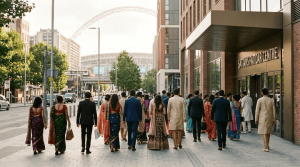
On parking, there are 220 free, on-site managed spaces, which matters more at a ceremony than people expect — guests tend to arrive within a tight thirty-minute window rather than trickling in over an evening, so parking that can absorb everyone at once, rather than a handful of spaces that fill up fast, makes a real difference to how smoothly the day starts. Wembley Park station is also a three-minute walk away for guests travelling by the Metropolitan or Jubilee line.