
Whether the quoted catering figure is per head or a minimum total. What happens if the event runs late? These aren’t obscure details. They’re the ones that determine whether the day runs well or turns into a series of phone calls no one wanted to make.
A proper wedding venue checklist doesn’t have to be long. It just has to cover the things that actually matter before you commit to anything.
Capacity: Ask the Working Figure, Not the Room Maximum
Every wedding venue will quote you a maximum. What you need is the working figure – capacity with round tables in, a dance floor, a top table, a cake table, and wherever the bar is going. In a room that hasn’t been designed for events, those elements can take out 30 to 40 per cent of the stated capacity before a single guest has arrived.
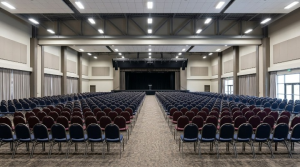
For large banquet halls for weddings, this gap matters more. A hall described as holding 400 can seat 260 comfortably once the room is properly set up. Ask the venue directly: What does this room hold for a seated dinner with a dance floor? If they can’t give you a straight answer, that tells you something. At Sattavis Patidar Centre, the Mostyn Suite seats 500 for a sit-down dinner with a dance floor included – and that’s the number they’ll quote you upfront, not the empty-room version.
The Full Cost Breakdown (Not Just the Hire Fee)
‘Room hire’ is the figure venues put in the subject line of the email. It is rarely the figure you’ll actually pay. Before signing anything, ask for a written breakdown that covers: room hire, catering per head or minimum spend, AV and equipment charges, staffing, setup and breakdown time, and the overtime rate if the evening runs past the agreed finish.
Some venues bundle most of this into a single quote. Others itemise everything separately, which isn’t a problem as long as you know how to ask. The issue is when couples compare a bundled quote from one venue against a bare room hire figure from another and assume they’re looking at equivalent costs. They’re not. Put everything on the same basis before making a decision.
Banqueting Halls in Wembley: Why Location Changes the Numbers
Central London wedding venues charge for the postcode as much as the room. The hire fee, the catering minimum, even the staffing costs – all of it reflects where the building sits rather than what the building actually offers.
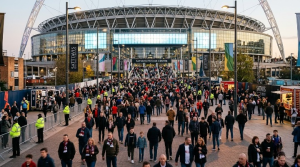
Banqueting halls in Wembley tend to give you more room for the money, partly because the overheads are lower and partly because the venues are often purpose-built for events rather than converted from something else. Wembley Park station is on the Metropolitan and Jubilee lines, which means guests from across Greater London have a straightforward journey without anyone needing to navigate Zone 1 at 11pm. For couples who want a large wedding venue without the central London premium, it’s a location worth considering seriously.
Venues with Parking Available – Add It to the Checklist
This one gets left off more wedding venue checklists than it should. Parking feels like a logistics detail, and logistics details get pushed to later. Then it’s three weeks before the wedding, and someone realises that 180 guests are arriving by car and the nearest car park is a ten-minute walk and charges by the hour.
Venues with parking available solve that problem before it starts. Sattavis Patidar Centre has 220 on-site spaces, managed by staff on event days at no charge. For a large celebration where guests are coming from outside London, that’s not a minor convenience – it’s the difference between guests arriving relaxed and guests arriving stressed. It’s also the kind of thing that doesn’t appear on a venue’s promotional photography but that people remember more than the centrepieces.
What Else Belongs on a Wedding Venue Checklist
A few more questions are worth asking before you sign anything. Is the venue licensed for civil ceremonies, or do you need to arrange that separately at a register office? What is the noise restriction or end time, and is there flexibility on that? Is catering in-house, or can you bring in an external team – and if external, what does the venue require in terms of kitchen access and insurance? Does the venue have a dedicated coordinator on the day, or does that cost extra?
On the subject of coordinators: ask how many weddings they typically run on the same day. A venue that double-books event spaces with thin staffing between them will manage your wedding alongside someone else’s, which affects attention and response time when things need sorting quickly. According to the UK Wedding Report, coordination failures and venue communication issues are consistently among the most common complaints from couples after the event. Worth knowing before you’re on the receiving end of it.
The Venue Visit: What to Actually Look At
Go in person. Photos flatten rooms and widen spaces in ways that a real visit doesn’t. Walk the route from the car park to the entrance. Look at the kitchen access points and ask how food gets from the kitchen to the room. Check whether the toilets are near the main event space or a long walk down a corridor. Look at the acoustics – an empty room with hard floors and no soft furnishings will echo badly during speeches.
If you can visit when another event is being set up, do that. Seeing a room half-dressed gives you a much more accurate sense of how it works than seeing it empty or fully decorated in promotional images.
The best wedding venues in the UK tend to have staff who are used to these questions and can answer them without hesitation. If the events team seems uncertain about basic logistics – catering timelines, noise restrictions, parking management – that uncertainty will still be there on your wedding day.
When you’re ready to look at a wedding venue that can answer all of this clearly, Sattavis Patidar Centre is worth a visit. Bring your guest list, your running order, and this checklist.