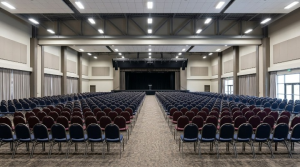

Few questions cause as much confusion as in-house vs outside catering at Wembley banqueting halls. Some venues insist you use their kitchen team. Some give you a list of approved caterers. Others hire out the space and leave the food entirely to you. Knowing which model a venue follows, and what is actually allowed, changes your budget, your menu choices and how much work lands on your plate. This guide explains the three common set-ups and the questions to ask before you sign anything.
The Three Common Catering Models
| Model | How it works | Suits | Watch out for |
|---|---|---|---|
| In-house only | The venue supplies the food and drink. You choose from its menus. | Couples who want one point of contact | Limited menu choice, especially for Jain or community dishes |
| Approved caterer list | You pick from caterers the venue has vetted. | Couples who want some choice but less risk | The list may be short or booked on popular dates |
| Dry hire | You hire the space and arrange your own caterer. | Families with a trusted caterer or specific dietary needs | You manage more of the planning and logistics |
None of these is better in every case. What matters is that the model fits the way your family eats and plans.
What Dry Hire Means for Catering
Sattavis Patidar Centre is available as dry hire. In plain terms, you hire the halls and bring in the caterer you want. That suits many Gujarati and Patidar families, who often have a long-standing caterer or particular requirements for vegetarian and Jain food. It also means the caterer needs to know the building, so introduce them to the events team early.
Kitchens at the Centre
Two of the halls come with a kitchen on hand. The Mostyn Suite has an adjoining kitchen, and the IK Suite has its own attached kitchen. That is a real advantage for a caterer, because food can be prepared close to where it is served rather than carried across the building.
Questions to Ask About What Is Allowed
Every venue has its own hire terms, ours included, so confirm the details with the events team rather than relying on general advice. These are the questions worth putting to any banqueting hall:
- Can I appoint my own caterer, or must I choose from a list?
- What equipment is in the kitchen, and what does my caterer need to bring?
- When can the caterer arrive, and how long do they have to clear?
- What are the arrangements for alcohol and licensing?
- How is waste handled after the event?
- Does the venue need proof of the caterer’s insurance and food hygiene rating?
Choosing an Outside Caterer
When you appoint a caterer for a venue you do not run yourself, ask for their Food Hygiene Rating and proof of public liability insurance. Ask whether they have worked in the building before, and request a tasting for the dishes that matter most to your family. If you are catering for guests with different dietary needs, ask how the caterer labels and separates the food on the day.
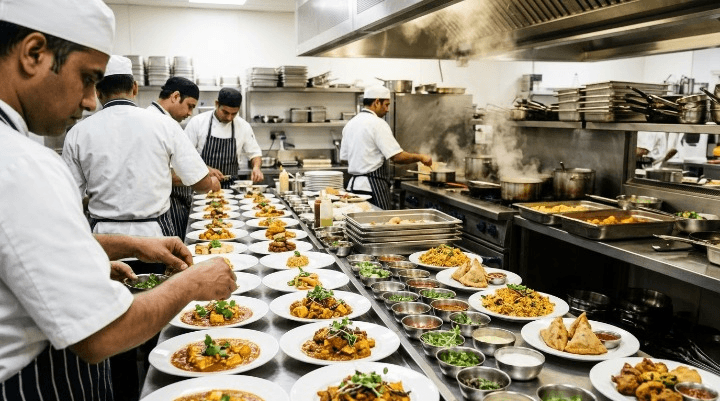
Common Catering Mix-Ups to Avoid
- Assuming the hire fee includes food. Confirm what is covered in writing.
- Booking a caterer before checking kitchen access and timings.
- Forgetting serving equipment, such as chafing dishes, serving spoons and warming facilities.
- Leaving dietary labelling until the last minute.
- Underestimating how much space the buffet and queues will take up in the hall.
Almost every one of these comes down to the same thing: nobody asked early enough. A short meeting between the caterer, the decorator and the events team a few weeks before the date usually settles them.
A Note on Timings
Food has to arrive when the schedule says it should, which at a wedding often means after a ceremony that has run long. Ask your caterer how flexible their timings are, and share the running order with them early. A caterer who knows the day’s rhythm can hold dishes, stagger service and keep the kitchen calm when the timing shifts.
Which Model Is Right for You?
If you value simplicity above all, an in-house package may suit you. If you have a trusted caterer, or need menus built around vegetarian, Jain or regional dishes, dry hire gives you more control. Whichever you choose, get the catering arrangements confirmed in writing, and see the kitchens in person before you commit. You can compare the halls on our premium banqueting halls page.
Putting It in Writing
Whichever model you choose, ask for the catering arrangements in the booking paperwork: who supplies the food, who is responsible for the kitchen, and what happens if the caterer has to cancel. The menu, the headcount deadline and the final payment date should be written down too. It can feel formal for a family event, but it protects everyone, and if something changes you have a record to refer back to.
Not sure about in-house vs outside catering at a Wembley banqueting hall?
Talk to our events team about how catering works at the centre and have a look at the kitchens in person.
Book a Free Viewing Contact our events teamCall 020 8904 9191 or WhatsApp 07913 752727